Filming at Point Conception: Precision, Patience, and 158 Stairs
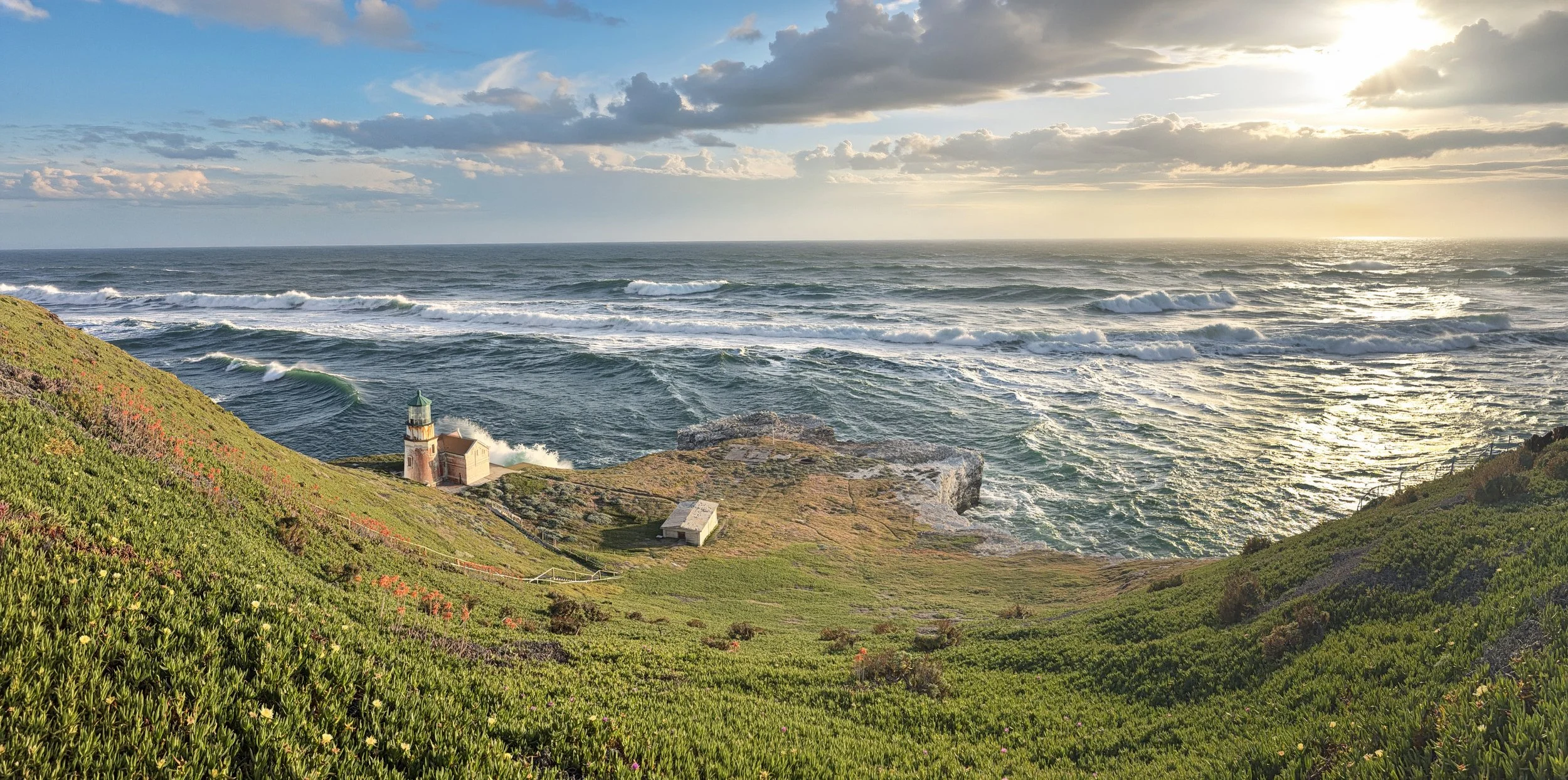
Point Conception Lighthouse Stormy Afternoon
There are certain locations along the California coast that stay with you—not just visually, but physically. Point Conception is one of those places.
The First Time — 1998
The first time I went to Point Conception was in 1998 on a location scout.
I made my way down to the lighthouse, and the conditions were intense—waves were pushing 25 feet, and the wind was blowing somewhere between 30 to 40 miles per hour. Every time a wave hit, it shook the ground where I was standing. The wind was so strong it made your eyes water instantly.
It wasn’t just a location—it was an experience. Raw, powerful, and unpredictable.
That moment stuck with me.
The Second Time — 2009
The second time I returned was in 2009, filming for the aerial documentary Above Santa Barbara.
This time, the perspective was completely different.
We were in the air—filming from a helicopter—able to move quickly along the coastline, capturing the scale and geography of the region in a way that only aerial cinematography allows. From above, Point Conception reveals itself differently: less about impact, more about form. You see the curves of the coastline, the isolation, the way land meets open ocean.
It it was like being Superman.. flying along…It was a rare vantage point—and a reminder of how much perspective shapes the story you tell.
A Coordinated Effort — Today
Coming back again for this current production, that history with the location made the experience even more meaningful.
This project focuses on the history of the region and the lighthouse itself—not just how it looks, but what it represents. A fixed point along a constantly shifting coastline. A place tied to navigation, weather, and the long relationship between land and sea at one of California’s most dramatic junctions.
Productions at Point Conception don’t happen casually. They require planning, precision, and collaboration.
We’re incredibly grateful to the United States Air Force and United States Space Force for their coordination and support in helping make this shoot possible. Their efforts ensured that everything—from access to timing—came together seamlessly. It’s a reminder that behind every successful shoot in a controlled or protected environment, there’s a team working quietly in the background to make it happen.
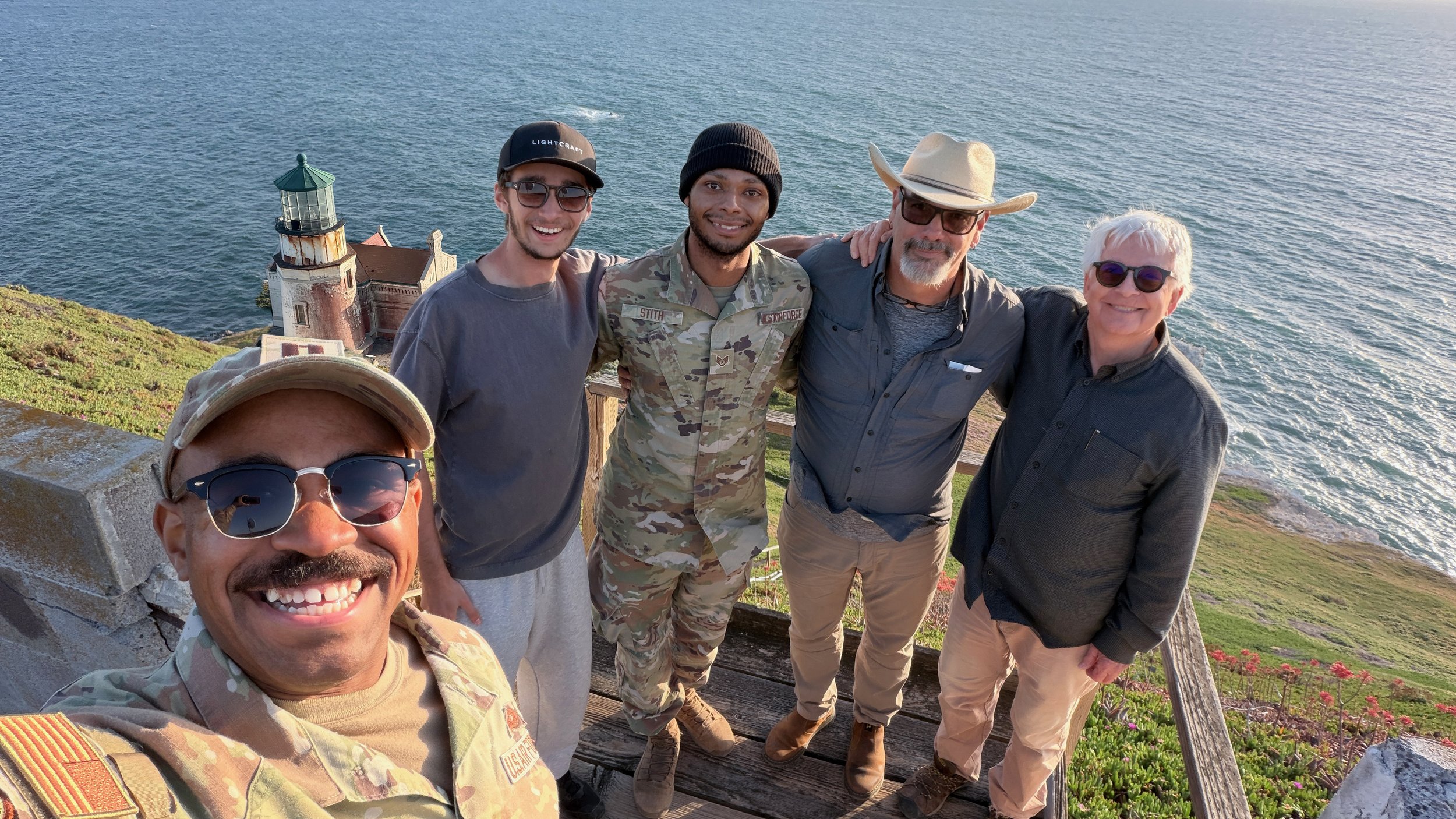
Captain Nelson, Ashton Gamble, SSgt Daekwon Stith, Brent Sumner, David Schniederman
The Landscape
The beauty of Point Conception isn’t just in its views—it’s in its contrasts.
Sheer cliffs meet open ocean. Clean lines of the lighthouse stand against unpredictable wind and water. The light shifts quickly, moving from soft coastal haze to sharp, defined clarity. It’s the kind of environment that rewards patience and punishes shortcuts.
For this shoot, the goal was simple: capture the geometry and discipline of the location in a way that supports the story—letting the environment and the history carry the weight.
From Air to Ground
Production methods evolve—and so does the experience of a place.
After seeing Point Conception from the ground in 1998 and from the air in 2009, this time meant working it the hard way.
On foot.
Up and down 158 stairs, repeatedly, carrying gear and working angles step by step. No shortcuts. Slower, more deliberate, and physically demanding.
But also more connected.
You notice the details. The textures. The rhythm of the space. The way the wind moves across the cliffs. The way the lighthouse anchors everything—not just visually, but historically.
And in the end, those details are what make the images feel grounded and intentional.
Why It Matters
At Studio 8, production isn’t just about capturing a location—it’s about understanding it.
Each visit—1998, 2009, and now—offered a completely different perspective. Ground-level intensity. Aerial scale. And now, a deeper focus on history and meaning.
That’s the value of experience.
Point Conception is a reminder that the best work often comes from returning to a place over time, seeing it from every angle, and telling not just what it looks like—but what it means.
Even when that process involves 158 stairs.
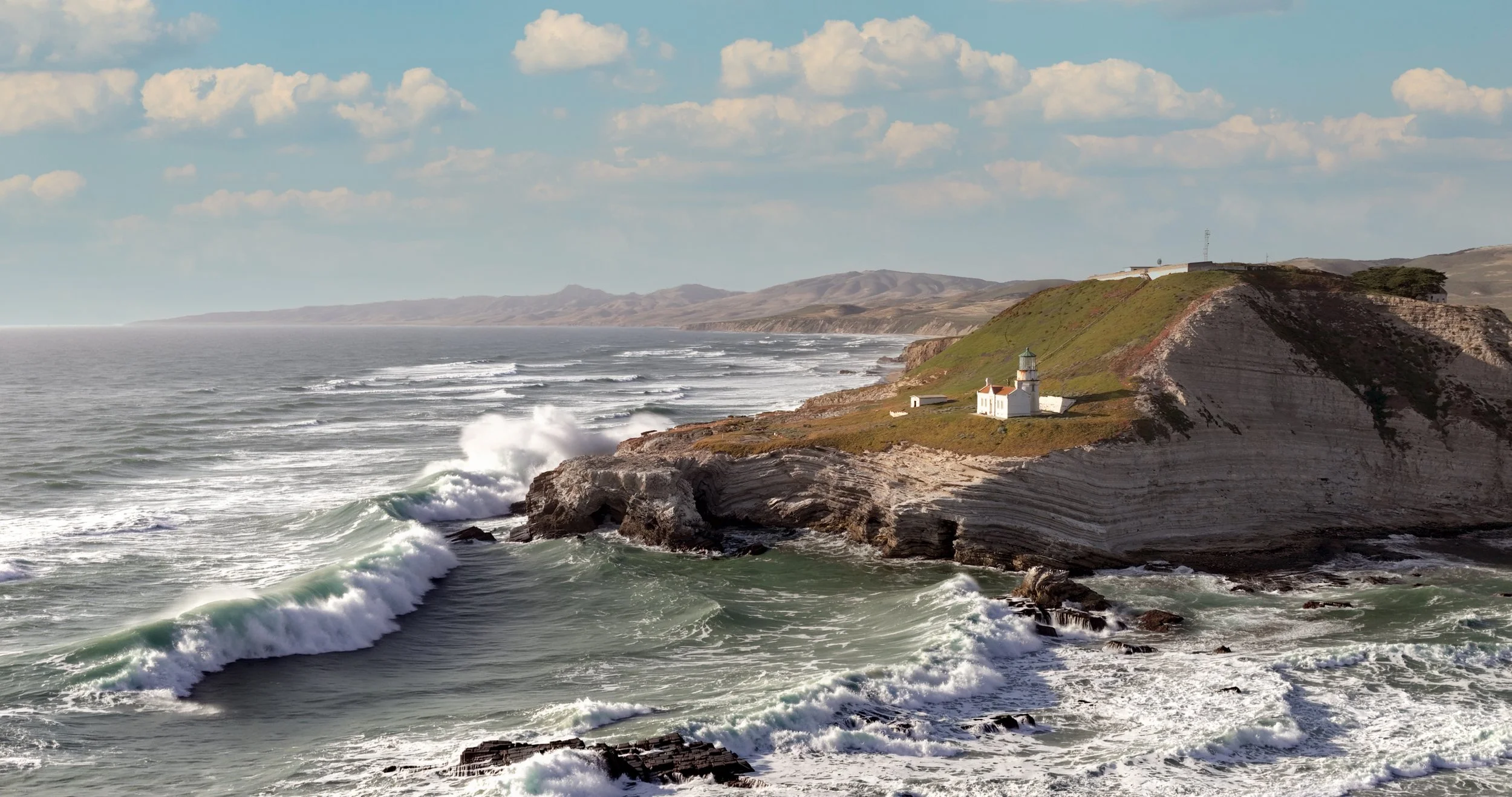
Point Conception Lighthouse Stormy 2026